
Freedom, Innovation, and Structural Fragility: Are We at a Crossroads?
Crypto’s evolution exposes its fragile balance between freedom, innovation, and systemic risk.
Crypto often sees itself as mature, ready to school the world on freedom, transparency, and innovation, and to some extent, that's true. But in many ways, the sector is more like an adolescent convinced of its maturity just as it undergoes rapid changes. The best evidence is what played out between October 10 and 11, 2025: a record $19.3 billion was wiped out in an unprecedented cascade of liquidations.
Crypto Market Structure: Certainties and Unknowns
The crypto ecosystem is built around blockchain, one of the few certainties in the space. Layered onto it are technologies such as Zero-Knowledge Proofs for privacy, oracles for off-chain data integration, and smart contracts powering advanced, automated logic.
Innovations like these have driven explosive growth in Web3: from DEXs to futures platforms, tokenized assets, and global liquidity networks. However, with added complexity comes a broader attack surface. Early threats targeted blockchain security itself, but today, it's support infrastructure, as bridges, oracles, liquidity layers, DeFi protocols, that attract malicious actors. Over the past five years, attacks on these components have led to losses totaling hundreds of millions of dollars, exposing the vulnerabilities of a system lacking centralized oversight.
Unlike traditional markets, crypto never sleeps: it operates 24/7, which, while a hallmark of freedom, also magnifies risk. In the event of an exploit or manipulation, there are no circuit breakers, an attack can continue uninterrupted until the funds are gone or a patch is deployed.
October 10, 2025: Anatomy of a Historic Attack
On October 10, 2025, around 20:00 utc, the crypto ecosystem suffered its largest mass liquidation: $19.3 billion erased in just over 30 minutes, impacting more than 1.6 million accounts, many wiped out completely.
It began with President Donald Trump's announcement of 100% tariffs on Chinese tech products, a move that briefly deflated the broader markets. However, what followed was a highly orchestrated operation.
At around 20:00 UTC, Bitcoin led a sharp downturn. Market makers, anticipating severe volatility, withdrew liquidity from Binance and other exchanges, dramatically reducing market depth.
Between 21:00 and 21:30 UTC, a coordinated group dumped roughly $60 million in wrapped assets (USDe, wBETH, BNSOL). With liquidity gone, prices dump:
wBETH dropped to $430 - BNSOL fell to $34.9 - USDe hit $0.65
These distortions were immediately picked up by Binance oracles, which recalculated futures margins using the manipulated values. Thousands of positions were instantly liquidated.
At 21:35 UTC, the damage was done: $19.3 billion lost in 35 minutes. Only at this point did market makers return, re-injecting liquidity and normalizing prices.
This episode revealed systemic fragility.
Automated Market Makers, instead of stabilizing the market during a crisis, acted only in their own interest. Oracles did their jobs, but as automated systems, they failed to recognize ongoing price manipulation, feeding distorted data to Binance's futures platform. Binance itself had unwittingly set the stage by announcing a pending change to its derivatives pricing methodology—planned to go live just hours after the exploit.
Are We Truly Ready for Financial Complexity?
This was not just a technical glitch: it was a costly lesson.
The event underscores how immature the crypto market still is when it comes to managing systemic risk and preventing complex scenarios familiar to traditional finance. For a market that prizes freedom and decentralization, embracing derivatives and automated liquidation mechanisms introduces risk: financial sophistication is being layered on top of insufficient foundations of security and governance. The result? An ecosystem that is hyper-efficient in bull markets, but deeply fragile in times of stress. The main issue isn't the technology, which continues to evolve rapidly, but the lack of systemic maturity.
Many protocols and exchanges still operate with a startup mindset, prioritizing growth over resilience. Security audits, reserve transparency, and market maker behavior remain inconsistently regulated and standardized. Plus, many participants are still focused on quick profits rather than real risk management, creating an ecosystem where innovation outpaces awareness.
CEXs and DEXs: Roles Have Never Been Clearer
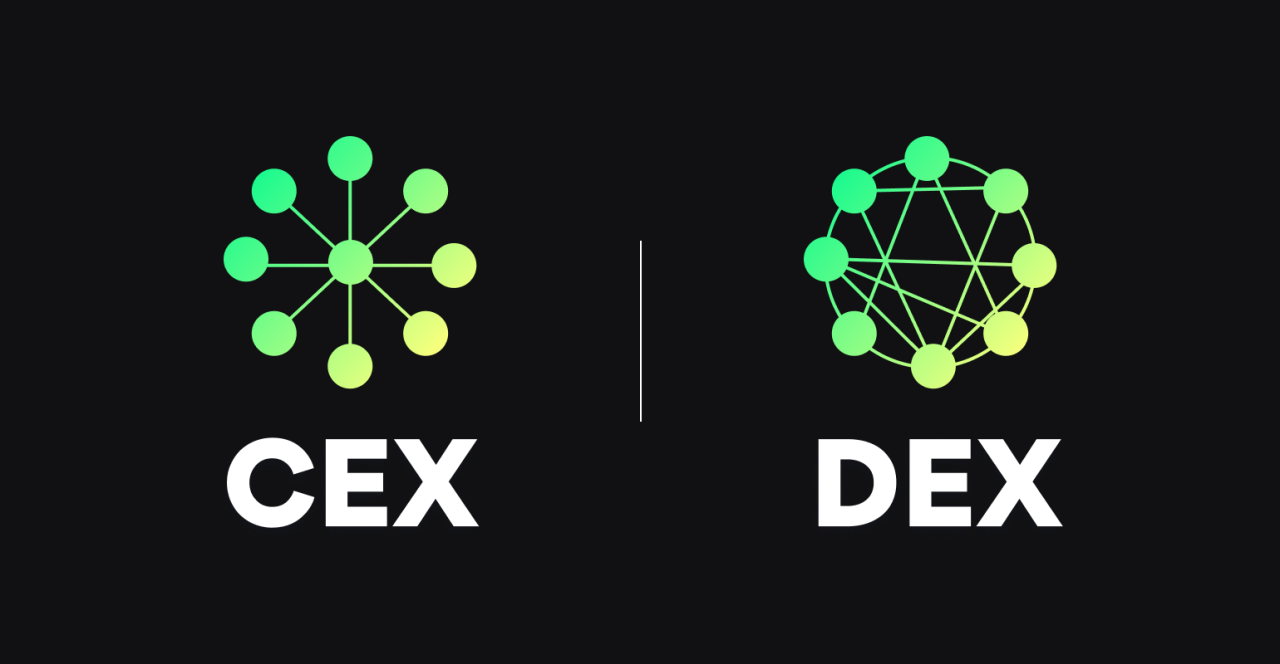
After years of uncontrolled experimentation, crypto now faces a clear distinction: the separation of Centralized Exchanges (CEXs) and Decentralized Exchanges (DEXs). These two models have long lived in ambiguous coexistence, often blurring boundaries that don't suit their actual operations.
CEXs, like Binance, Coinbase, and OKX, are now global financial institutions. They manage billions in assets, offer products like futures, lending, staking, and derivatives, and handle market power similar to major investment banks. As a result, regulation is beginning to treat them as such:
Enforcing transparency and reserve requirements Requiring regular audits for custody and liquidity - Imposing investor protection mechanisms, including compensation funds and emergency protocols
CEXs can no longer hide behind crypto-native narratives of decentralization and financial freedom. If they act as financial institutions, they must assume full responsibility and offer real guarantees.
DEXs, meanwhile, remain the core of DeFi. They offer a truly permissionless environment, interactions occur through protocols, governed by code, with no intermediaries*. However, with maximum freedom comes maximum risk: exploits, bugs, manipulation, and design errors can lead to irreversible losses. Ultimately, liberty and privacy in crypto are luxury goods, and, as with all luxury goods, not everyone is willing or able to pay the price.
The split between CEXs and DEXs is therefore not just technical, but, in some way, philosophical:
CEXs embrace regulated evolution and act as a bridge to traditional finance, prioritizing investor protection at the cost of original crypto values. - DEXs carry the banner of blockchain experimentation and freedom: personal sovereignty is absolute, but risk is ever-present.
Accepting this duality isn't about taking sides, but acknowledging the necessity of both models: CEXs ensure inclusion and stability, while DEXs preserve innovation and the spirit of freedom that sparked the crypto revolution.
The Cost of Maturity

If crypto hopes to embrace the complexity of traditional finance, it must accept an uncomfortable truth: absolute freedom is incompatible with investor protection. Introducing rules, safeguards, emergency protocols, and oversight inevitably means compromising, at least partially, with the foundational ideals of decentralization, transparency, and lack of intermediaries. Each measure for investor safety brings some centralization, and every human intervention in the code reduces machine autonomy.
The real challenge is not to choose between freedom and control, but to strike a sustainable balance. Because if, in trying to resemble traditional finance, crypto fully adopts the same power structures, regulations, and intermediaries, even for decentralized protocols, we must have the courage to ask: is this progress, or just another sophisticated return to the past?